My Dog Bit a Frog or Toad — What Should I Do?
Updated: Aug 29
Dogs are naturally curious. They sniff, lick, chase, and sometimes bite things they probably shouldn't—including frogs and toads.
While many frogs are relatively harmless, some toads can release powerful toxins that may make your dog seriously ill. Knowing what to do during the first few minutes can make a major difference.
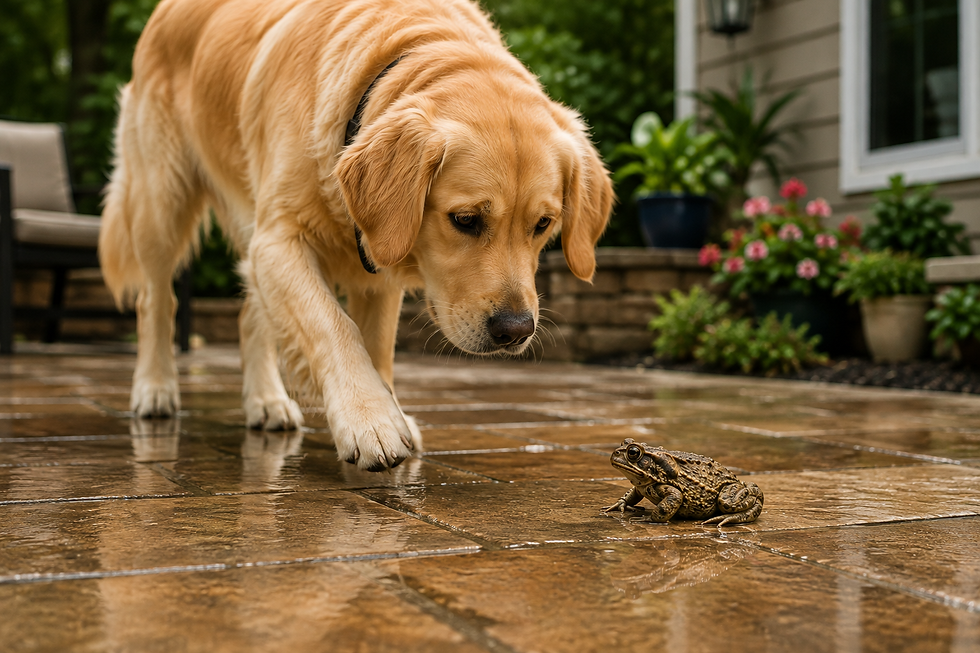
First: Stay Calm and Get Your Dog Away From the Animal
Immediately move your dog away from the frog or toad and prevent them from touching it again.
If possible, take a photo of the animal from a safe distance without handling it. This may help your veterinarian identify the species and determine the level of risk.
🚿 Rinse Your Dog's Mouth
If your dog may have bitten or licked a toad, toxin can remain on the gums and inside the mouth.
Immediately contact a veterinarian or pet poison service for guidance. If you can do so safely, gently wipe the gums and inside of the mouth with a damp cloth and rinse away visible residue. Keep your dog's head angled downward so water and material can drain out rather than being swallowed or inhaled.
Do not force water down your dog's throat.
Watch for Signs of Toad Poisoning
Symptoms can appear very quickly. Watch for:
Excessive drooling or foaming at the mouth
Pawing at the mouth
Red or irritated gums
Vomiting
Difficulty walking or loss of coordination
Tremors or shaking
Unusual breathing
Abnormal or rapid heartbeat
Seizures
Weakness or collapse
If your dog develops neurological symptoms, has trouble breathing, collapses, or has a seizure, treat it as an emergency and go to the nearest emergency veterinarian immediately.
A Special Warning for Florida Dog Owners
Dog owners in Florida should be particularly cautious because of the cane toad (also called the bufo toad).
Cane toads can secrete a potent toxin from glands behind their heads when threatened. A dog doesn't necessarily have to eat the toad to become poisoned—licking or biting one can be enough to cause a dangerous reaction.
Cane toads are often encountered around yards, patios, sidewalks, landscaping, and areas near water, particularly during warm and wet conditions.
If you suspect your dog has encountered a cane toad, don't wait for severe symptoms before contacting a veterinarian.
What NOT to Do
Don't induce vomiting unless a veterinarian specifically instructs you to do so.
Don't give your dog human medications, milk, food, or home remedies in an attempt to neutralize the toxin.
And don't assume your dog is safe simply because they appear normal immediately afterward. When a potentially toxic toad is involved, symptoms can develop rapidly.
When Should You Call the Vet?
If you don't know what species your dog encountered, it's safest to contact your veterinarian for advice.
For suspected poisoning in the United States, you can also contact:
ASPCA Animal Poison Control Center: (888) 426-4435Pet Poison Helpline: (855) 764-7661
Fees may apply.
If your dog is already showing serious symptoms, go directly to an emergency veterinary hospital rather than waiting for symptoms to improve.
Prevention Is the Best Protection
A few simple precautions can reduce the chance of an encounter:
Keep dogs supervised outside, especially after dark and following rain. Check your yard before letting your dog out if toads are common in your area, and avoid leaving pet food or water outside overnight, as these can attract insects and other wildlife.
Teaching commands such as “leave it” and “drop it” can also be extremely valuable when your dog becomes interested in something potentially dangerous.
Keep Those Curious Noses Safe
Our dogs don't always know what's dangerous—and sometimes their curiosity gets the better of them.
Knowing how to react quickly to a frog or toad encounter can help you protect your four-legged family member when every minute counts.
Love Puppies — We care for them like family.
This article is for general educational purposes and is not a substitute for professional veterinary advice. If you believe your dog has been exposed to a toxic frog or toad, contact a veterinarian or animal poison-control service promptly.

Comments